Table of Contents
Inrtoduction
Imagine this: it’s early 2026. You wake up to a notification from a digital assistant that not only has read your calendar, but has suggested reshuffling your meetings based on traffic, your mood (from your morning journal), and the weather. Meanwhile, your small business’s logistic chain is being autonomously adjusted by forecasting bots to dodge supply disruptions. Or you, the novelist, are quietly dictating a scene to a generative-AI co-writer that adapts its style to your emerging characters. And somewhere deep in the cloud, a quantum-hybrid system is attacking a combinatorial optimization problem that was unsolvable a year ago.
That might sound futuristic, but many of the tech seeds are already planted today. In 2026, several breakthroughs could reach a tipping point—becoming disruptive, not just incremental. Below I explore ten innovations I believe stand the best chance of pushing the world off its current rails—and how they matter to you, whether you run a business, craft stories, or simply wonder why.
1. Agentic AI & Multi-Agent Ecosystems
Think: teams of AIs collaborating, not just a single chatbot.
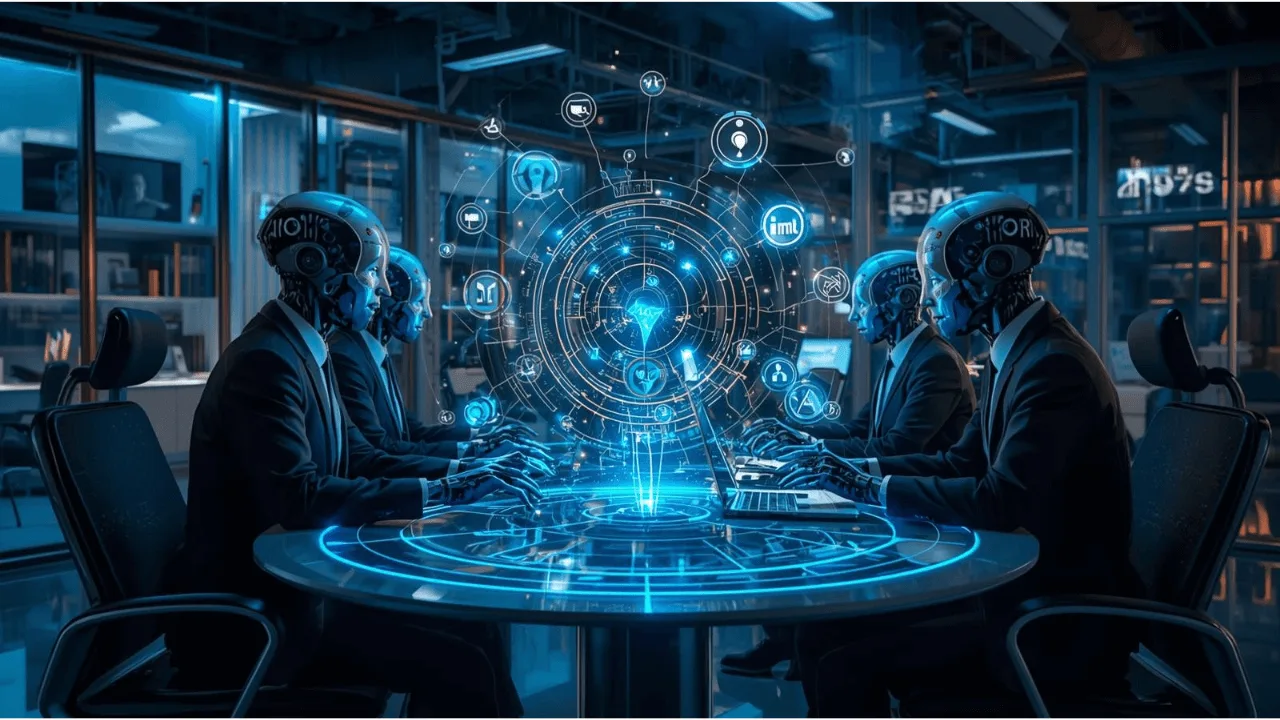
We’re heading from “smart assistants” to intelligent agent networks that coordinate to solve complex tasks. Rather than one AI doing everything, a dozen specialized agents (finance, marketing, logistics, creative, legal) negotiate, delegate, and cross-check each other. This “multi-agent orchestration” is a major trend in enterprise tech.
Why it matters:
- For small businesses, this means orchestration tools that can resemble hiring an entire mini-team of AI assistants, lowering overhead and scaling capabilities.
- For an aspiring novelist, you might prompt an agent to handle historical research, another to fact-check, and a third to polish prose—so your creative flow isn’t interrupted.
- Philosophically, it raises questions about responsibility, emergent behavior, and the boundaries between autonomy and control.
Mini example:
A boutique chocolate shop uses agentic AI: one agent monitors raw cacao supply globally, another forecasts demand, a third dynamically adjusts pricing, and a fourth handles customer outreach. No human orchestrator in the loop—yet the system self-balances stock, promotions, and delivery logistics.
2. Generative AI 2.0 — Style, Context, and Trust
From “just generate” to “generate with you.”

We’ve seen GPT-4, DALL·E, Stable Diffusion. But 2026 might bring the next wave: models that deeply internalize personal style, narrative arcs, or brand ethos, enabling long-form consistency and trust. Also, more robust guardrails (less hallucination) and built-in provenance.
Why it matters:
- A small business can generate marketing copy, blog posts, and even product descriptions that sound like them, not like generic AI.
- The novelist can open a novel mid-draft and the AI picks up on tone, rhythm, characters, without rubbing you out of the flow.
- On the myth-debunking front: there’s a belief that generative AI will replace human creativity. I argue instead: it augments and amplifies what’s already in you, like an echo chamber for your ideas.
Mini example:
A small café chain uses generative AI to tailor email newsletters to each customer’s taste—past orders, local events, and writing style. The responses improve, engagement rises, and the brand becomes more intimate.
3. Edge AI + Smart Sensing Networks
Where “the cloud” meets “the thing next to you.”
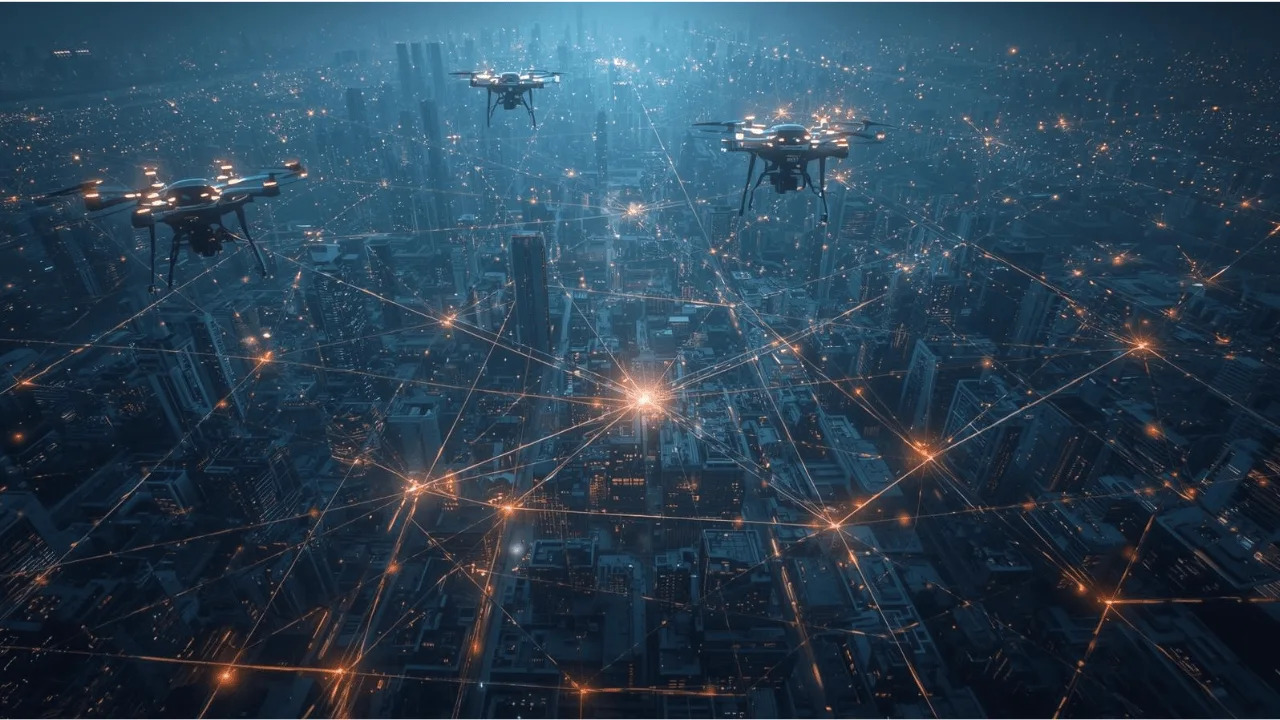
Instead of sending all data to a central server for computation, edge AI processes information right where it’s generated (a camera, a machine sensor, a drone). Combine that with advanced sensor networks—environmental, biometric, structural—and you unlock real-time autonomy.
Why it matters:
- For a small factory, predictive maintenance can happen on the spot. Broken motor? The machine tells you and reorders parts automatically.
- As a writer living in a remote locale, you might experiment with augmented reality environments or IoT devices that respond in real time to expression, mood, light, ambient sound.
- Philosophically, this collapses distance between perception and response: the world begins to act rather than just report.
Mini example:
A café in a rainforest region uses humidity, temperature, and foot-traffic sensors with Edge AI to modulate ventilation, lighting, and even music—all adjustments happen without delay or reliance on remote servers.
4. Quantum-AI Hybrids for Hard Problems
Where classical and quantum computing lock arms.

Quantum computing is often overhyped, but by 2026 we may see quantum-augmented AI systems tackling tasks that even the best conventional AI gates struggle with: molecular simulation, supply chain optimization, cryptographic analysis.
Why it matters:
- A small business might access quantum-backed recommendation engines or secure communication protocols once thought reserved for national labs.
- A novelist writing sci-fi could lean on real quantum burst data or plausible atomic interactions, making world-building deeper.
- A myth to debunk: that quantum is “just a fad for nerds.” I’d argue that quantum hybrids are a hidden engine behind leaps in medicine, materials, and AI’s own architecture.
Mini example:
A materials startup uses a quantum-AI system to rapidly test new eco-friendly polymers. In weeks, a candidate appears that previously would’ve required months of classical simulation. They patent it, launching a breakthrough packaging business.
5. Augmented & Mixed Reality (XR) — “Physical + Magical”
Not just VR headsets—but-real worlds overlaid with imagination.
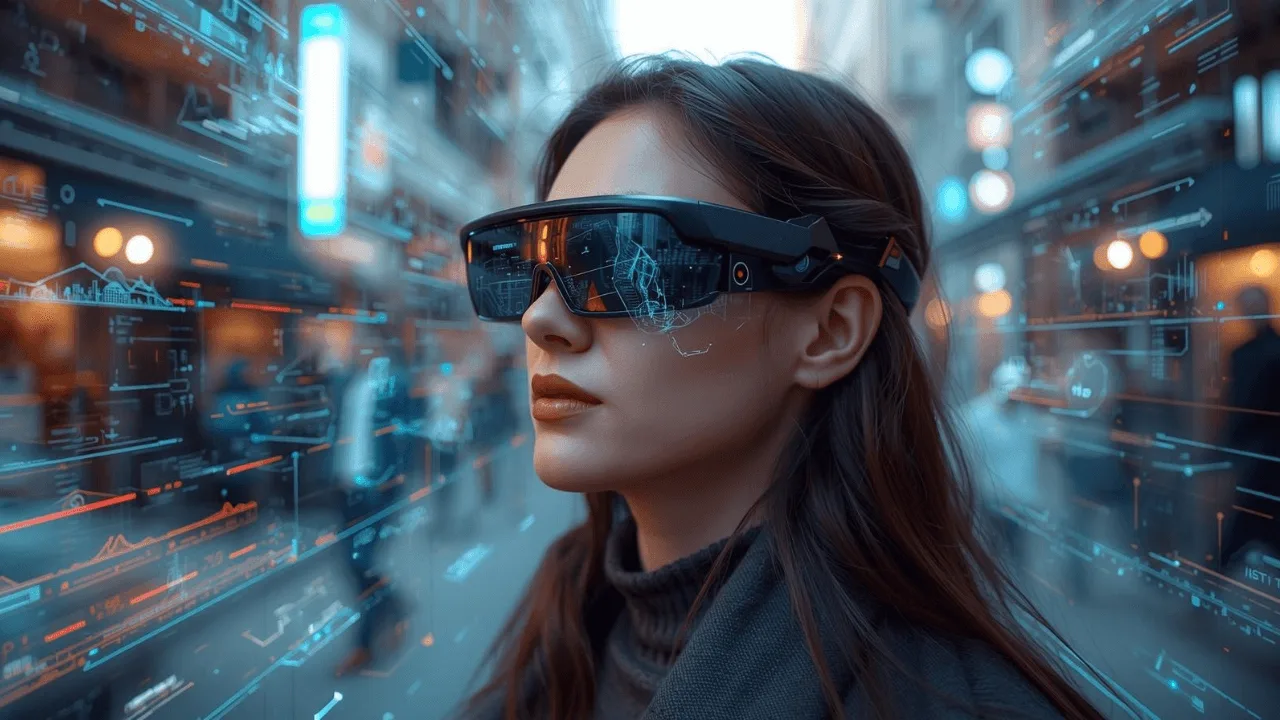
By 2026, XR will move beyond novelty demos into integrated workflows: design, collaboration, storytelling, training. AR glasses with persistent spatial awareness, contextual overlays, and shared environments will feel less gimmick and more tool.
Why it matters:
- For a business opening a new retail outlet, previewing layout via AR can prevent costly structural changes.
- A novelist might co-write with collaborators across the world in a shared virtual room, scribbling plot arcs in midair.
- On the philosophical side: the boundary between “real” and “virtual” begins blurring. What is the ontological status of an augmented object?
Mini example:
A small artisan brand lets customers try on virtual versions of fabrics or furniture in their own rooms with AR. The drop in returns and the boost in confidence pay off quickly.
6. Digital Twins & Simulation Loops
A mirror world to test reality before you act.

A digital twin is a dynamic, live simulation of a physical system—factory, supply chain, building, ecosystem. Combined with feedback and AI, it becomes a control loop. 2026 may see digital twins used not just for prediction but active management.
Why it matters:
- A supply chain twin can test “what if” scenarios—what if there’s a flood in Malaysia? What if shipping costs spike? You see performance before real damage.
- A novelist interested in ecological futures can simulate climate or societal shifts in a parallel digital world to ground speculative fiction.
- Debunking myth: that simulations are toy models. When paired with real-time data, they become tactical tools.
Mini example:
A farm uses a digital twin of its fields, weather, and soil moisture. When sensors detect dryness, predictive models suggest irrigation adjustments—or crop swaps—with just enough lead time to optimize yield.
7. Trust, Transparency & AI Governance
Because disruption breeds skepticism—and resistance.

Even the most dazzling AI systems will face backlash if they’re black boxes. In 2026, regulation, auditability, and trust frameworks will become essential parts of disruptive tech adoption. Algorithms must explain decisions; policies must govern data use and fairness.
Why it matters:
- A small business using AI must differentiate itself not just on convenience, but ethical posture.
- A novelist exploring AI as a narrative tool must grapple with AI’s agency, bias, and legitimacy.
- Philosophically, this is rich turf—questions of accountability, opacity, and the relation between creator and creation.
Mini example:
A health-tech startup offers AI diagnosis—but includes a built-in “explain mode” that maps how each symptom tipped the scale. Patients and doctors see the reasoning, increasing trust.
8. Biotech, Longevity, and Synthetic Biology
Engineering at the level of life itself.

By 2026, advances in gene editing, cell therapies, and synthetic biology may push boundaries of aging, diagnostics, and even biomanufacturing. Labs will lean more on computational biology, small-batch biofabrication, and living materials.
Why it matters:
- A small business in agro-food could bio-engineer microbes for sustainable packaging or plant resilience.
- A novelist can weave characters whose biotech augmentations are plausible—rooted in near-future science.
- Philosophically: what does it mean to “edit” life? Who gets to choose the trajectory of bodies and ecosystems?
Mini example:
A startup engineers bacteria that biodegrade plastic waste in local soil. They sell the microbes in sachets. The venture scales, and suddenly small-scale bioremediation becomes viable for towns.
9. Next-Gen Connectivity: Edge-to-Satellite + Pre-6G Experiments
When “anywhere” becomes truly “everywhere.”
While full 6G commercial deployment may still be years off, pilots and prototypes will appear in 2026. Think integration of terrestrial, aerial, and satellite networks, terahertz band experiments, intelligent surfaces, and ubiquitous coverage.
Why it matters:
- A small business in rural Malaysia could tap high-speed links once reserved for cities.
- A novelist traveling may carry connectivity anywhere—so creative flow, research, revisions never stop.
- Philosophically: does the digital world shrink physical remoteness? Is geography becoming obsolete?
Mini example:
A remote eco-lodge in Borneo connects via a hybrid satellite + smart surface network. Their guests stream VR, order services, and the lodge runs XR experiences as part of eco-tourism.
10. Purpose-Built Platforms & Outcome-First “Service as Software”
Moving from generic tools to domain-aware systems that deliver outcomes.
Instead of patching together APIs, 2026 might see platforms designed for specific verticals—healthcare, retail, creative, legal—with built-in agents, data models, compliance rules, and workflows. The user just says “I want outcome X” and the platform does the rest.
Why it matters:
- A small business selling niche handicrafts won’t have to build from scratch—they adopt a platform that already knows inventory, packaging, promotion, audience.
- A novelist might plug into a creative platform that knows publishing norms, agent queries, feedback loops.
- This challenges the myth that “software is generic infrastructure.” The next wave is context-aware, purpose-aware tools.
Mini example:
A wellness coach uses a purpose-built platform that integrates scheduling, therapeutic content generation, client tracking, billing, and outcome measurement. No glue code, no third-party juggling—just one coherent system.
Bringing It Together: A Narrative Thread
These ten innovations don’t exist in isolation. They feed and amplify each other:
- Agentic AI thrives with edge sensing networks and trust frameworks.
- Digital twins and XR combine in simulation environments.
- Quantum-AI hybrids push the frontier of generative models.
- Purpose-built platforms tie many of these strands together, packaging them for use.
For a small business owner: this is the era to experiment—not with isolated tools, but with integrated, intelligent scaffolding. For the novelist: these are the tools you’ll shape narratives with, not around. For the philosophy beginner: these are the crossroads you’ll inhabit, where machines act, reason, learn—and where we must ask why.
Conclusion: The Future as Co-author, Not Overlord
So, will 2026 usher in a robot apocalypse or a grand daybreak? Neither—and both. The disruption will be messy, beautiful, contested. The myth to debunk is that technology is a force outside us. In truth, disruption is a dialogue. The question isn’t what will tech do to us, but what do we ask tech to do with us?
If you are a business leader, a writer, or just someone curious about tomorrow—don’t passively wait. Begin small experiments now: adopt one agentic workflow, pilot edge AI, sketch a digital twin for your context. Use generative AI not as a replacement, but as a collaborator. Build trust and guardrails from day one.
I’ll close by returning to the opening: in 2026, your digital assistant doesn’t just notify you—it intervenes with reasoned proposals. But the path from today to that future lies in small courageous steps—not just in code, but in imagination, ethics, and human intention.
FAQ
Frequently Asked Questions
The rise of agentic AI—autonomous, multi-agent systems that can collaborate like human teams—will likely have the most profound impact. It’s already reshaping how small businesses, creators, and researchers get work done.
By 2026, quantum computing may not yet power your smartphone, but quantum-AI hybrids will start influencing logistics, materials science, and even climate modeling. Think of it as the quiet engine behind more intelligent software.
Generative AI 2.0 will focus less on raw creativity and more on context and continuity—adapting to your tone, brand voice, or artistic identity. It will feel less like a machine producing for you and more like a creative partner writing with you.
Not at all. Many of 2026’s breakthroughs—like purpose-built AI platforms and edge computing—are being designed with small businesses in mind. They lower technical barriers and automate processes that once required teams of experts.
Digital twins. They’re quietly transforming manufacturing, logistics, and even agriculture by allowing real-time simulation and experimentation before acting in the physical world.
No. That’s the biggest myth. AI can expand creativity by automating friction points—editing, research, visualization—so humans can focus on insight and storytelling. The novelist, artist, or entrepreneur who learns to collaborate with AI will thrive.
Start by experimenting with AI-driven tools, learning basic prompt design, and understanding how data influences outcomes. The best preparation for disruption is curiosity, not fear.
As technology gains autonomy, transparency and accountability become urgent. AI governance, explainability, and ethical data use will be key themes of 2026. Innovation without ethics risks public trust—and collapse.
Work will feel less like “doing tasks” and more like designing systems that do tasks with you. Skills in system thinking, creativity, and ethical reasoning will be more valuable than pure technical execution.
Possibly not. With pre-6G networks, edge computing, and mixed-reality layers, the internet will become more spatial, immersive, and context-aware—closer to a “living ecosystem” than a flat web page.