Introduction
Remember the last time you fumbled for your keys in the pouring rain, arms full of groceries, desperately wishing the door would just open? For a moment, you dreamed of a home that anticipated you. That was the promise of the “smart home.” But so far, for many of us, that promise has felt more like a digital chore list. We’ve traded one set of tasks for another: instead of flipping a light switch, we’re digging through apps; instead of adjusting the thermostat, we’re yelling at a uncomprehending cylinder on the counter.

But what if that’s all about to change? What if, by 2026, our homes stop being merely “smart” and start becoming perceptive, proactive, and even a little bit personal? We’re on the cusp of a seismic shift, moving from a world of connected gadgets to one of integrated intelligence. The future home won’t just obey your commands; it will understand your context, predict your needs, and curate your environment. It’s the difference between a tool and a teammate.
Table of Contents
From Commands to Conversations: The Rise of the Context-Aware Home
For the past decade, the dominant language of the smart home has been the command. “Hey Google, turn on the lights.” “Alexa, set the thermostat to 72.” It’s functional, but it’s also transactional and, frankly, a bit robotic. The AI of 2026 is learning to speak a new language: the language of context.
Think of it as the difference between a new hire who needs explicit instructions for every task and a seasoned chief of staff who anticipates your needs before you articulate them. This shift is powered by ambient intelligence—a combination of sensors, low-power AI chips embedded in everything from your doorframes to your ceiling lights, and sophisticated large-language models that don’t just process words, but interpret meaning.

A Day in the Life, 2026:
- 7:00 AM: Your bedroom, sensing the subtle shifts in your sleep cycle (via a non-wearable sensor under the mattress), begins your wake-up routine 10 minutes before your alarm. The blinds inch up to filter in the dawn light, and the thermostat subtly raises the temperature from its energy-saving nighttime setting. The coffee maker, knowing your first meeting is at 8:30, has already brewed your single-origin roast.
- 6:30 PM: You walk in the door after a long, stressful day. The entryway camera notes your tired expression and the way you dropped your bag. Instead of your usual “energizing” lighting scene, the house dims the lights to a warm, calming amber and plays a soft, instrumental playlist from your “Relax” library. The smart lock bolts behind you without a sound.
- 10:00 PM: As you move from the living room to the bedroom for the night, the house follows you, turning off the TV and lights behind you, and arming the security system. It’s not a command; it’s a conclusion it draws from your patterns.
This isn’t about a single device getting smarter. It’s about the orchestration of every device in the home, working in concert like a well-rehearsed orchestra, with the AI as its conductor.
The Invisible Guardian: Proactive Safety and Holistic Wellness
Today’s home security is largely reactive. A camera records a break-in. A sensor beeps when a window is opened. The home of 2026 is shifting from a simple watchdog to a guardian angel, focusing not just on security, but on holistic safety and wellness.

Safety Reimagined:
Imagine a water sensor that doesn’t just tell you a pipe has burst, but a system that learns the normal moisture levels in your utility room and alerts you to a tiny, persistent drip before it becomes a catastrophic leak. Or an electrical system that analyzes power draw across your home, identifies a faulty appliance that’s a fire risk, and automatically shuts off power to that outlet, sending you a detailed diagnostic report.
The most profound advances, however, will be in wellness, particularly for aging populations and those living with chronic conditions. This is where the “soulful” home truly emerges.
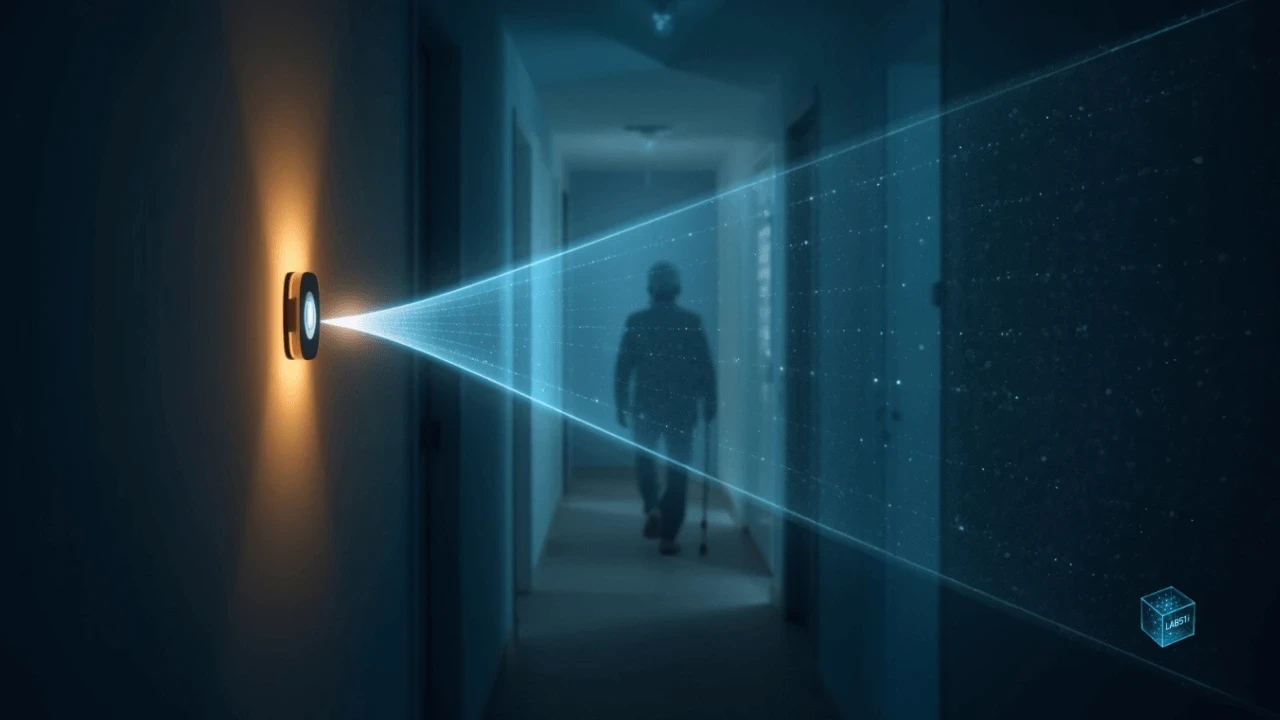
- The Home as a Health Partner: Passive radar sensors (which don’t use cameras, preserving privacy) can detect a fall in the bathroom and immediately alert family or emergency services. More than that, they can learn a person’s gait and identify subtle changes that might indicate the onset of illness or mobility issues, prompting an early visit to the doctor.
- The Environmental Curator: Your home will actively manage your environment for your well-being. On a high-pollen day, it will seal the windows and activate advanced air purifiers before you even start sneezing. If it knows you’ve had a poor night’s sleep, it might adjust the color temperature of your lights throughout the day to help regulate your circadian rhythm. It’s a home that doesn’t just shelter your body, but actively cares for it.
The Great Bargain: Navigating the Privacy Paradox
This all sounds wonderful, until you pause to consider the implication: for your home to know you this intimately, it must collect an unprecedented amount of data about your most private moments—your sleep, your health, your moods, your routines. This is the great bargain of the AI-powered home, and it’s the single most critical issue we will grapple with by 2026.
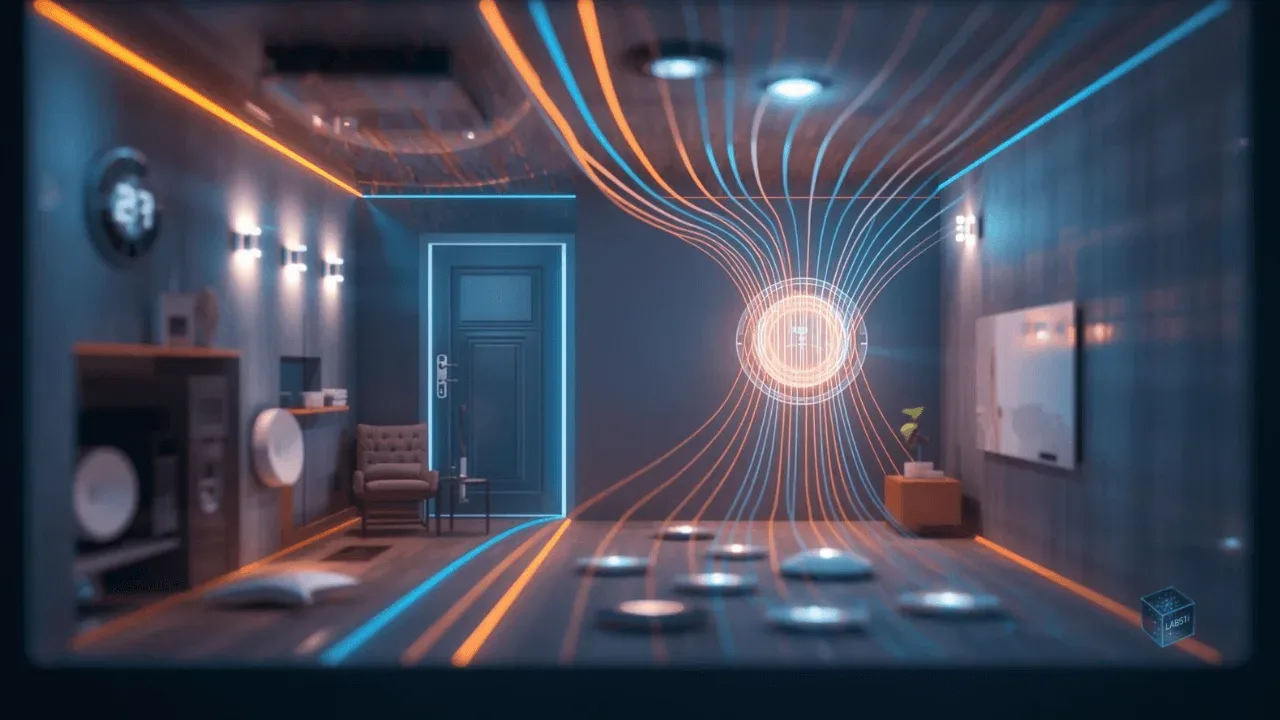
The current model, where data is often shipped to the cloud for processing, will become untenable. The future is local. The most sensitive processing will happen on-device, in what’s called the “edge.” Your home’s “brain” will be a local hub. Your whispered conversations, your daily routines, your health metrics—they won’t need to travel to a server farm in a different state. They’ll be analyzed and immediately discarded or anonymized within the walls of your home.
Think of it like a thoughtful friend. A good friend observes you, learns your habits, and uses that knowledge to be more helpful. But a good friend doesn’t write down every detail of your life in a notebook and mail it to a corporation. The AI home of 2026 must be that good friend.

We, as consumers, will need to become more sophisticated. We’ll need to look for transparency in data practices, favor companies that prioritize on-device processing, and understand the privacy trade-offs we’re making. The question won’t be, “Is this device smart?” It will be, “Is this device trustworthy?”
Conclusion: Building a Partnership with Four Walls
The smart home of the past was a collection of gadgets; an impressive, but often frustrating, tech demo. The AI-powered home of the near future is something else entirely. It’s an adaptive environment, a proactive guardian, and a wellness partner. It’s a home that moves from simply housing our stuff to truly understanding us.
This future isn’t about laziness; it’s about liberation. It’s about freeing up our mental bandwidth and physical time from the mundane tasks of domestic management—the adjusting, the checking, the worrying—so we can focus on what truly makes a house a home: connection, creativity, and rest.
So, the next time you struggle with a stubborn smart bulb or a misheard voice command, take heart. We are not just building smarter houses. We are learning to build houses with a little bit of soul. And the key to that front door is no longer a piece of metal, but a relationship built on context, care, and a carefully negotiated trust. The house that knows you is almost here. The real question is, are you ready to be known?
FAQ
Frequently Asked Questions
While cutting-edge technology often starts at a premium, the core components—AI chips, sensors, and software—are rapidly becoming more affordable. By 2026, we expect these features to be increasingly integrated into mid-range appliances and new home constructions. Much like smartphones, the technology will trickle down, becoming accessible to a broader audience through subscription models and modular, upgradable devices.
This is the most critical question. The key shift is from cloud-based to local, on-device processing. This means your most sensitive data (like your daily routines or health metrics) is analyzed and immediately discarded on a local hub in your home, rather than being sent to a company’s server. When purchasing future smart home devices, look for brands that are transparent about their data practices and explicitly advertise “on-device AI” or “local processing.”
This is a major improvement of the AI-powered home. With a strong local network and on-device intelligence, your core “context-aware” automations will continue to function. Your lights, thermostat, and security system will operate based on their learned patterns and local sensors. You may lose some remote access or complex cloud-based queries, but the house itself will remain intelligent and functional.
It’s a fair point, but a better way to frame it is that it’s freeing us from mental load and mundane tasks. The goal isn’t laziness; it’s liberation. By offloading the cognitive burden of managing your home’s environment, security, and maintenance, you free up mental energy and time for what truly matters—spending time with family, pursuing hobbies, resting, and being creative. The technology is a tool to enhance human experience, not replace it.
The current “walled garden” problem is a significant hurdle. However, the industry is moving towards new universal standards like Matter, which aims to ensure that smart home devices are secure, reliable, and seamless to use, regardless of the brand. By 2026, we expect greater interoperability, allowing you to mix and match devices from different companies that all speak the same fundamental language.
Absolutely. The beauty of this evolution is that much of it is additive. While new builds can have wiring and sensors integrated into the walls, retrofitting an existing home is entirely feasible. Smart hubs, plug-in sensors, smart bulbs, and Wi-Fi-enabled appliances can be added piece by piece to create a deeply integrated and intelligent system without needing to tear down walls.