Table of Contents
Cross-Platform Play: The New Normal for 2026 Gamers
Introduction: The End of Console Wars
Remember when your choice of console decided who your friends could play with?
Back in the 2010s, Xbox players battled PlayStation fans online—not in Call of Duty, but in the comments section. A decade later, those days feel like ancient history.
It’s 2026, and the term “cross-platform” isn’t a buzzword anymore—it’s the default. Whether you’re gaming on a high-end PC, a mid-range console, or even your phone, you’re part of the same digital battlefield. Fortnite, Warzone, Rocket League, Minecraft, and countless others have torn down the walled gardens that once defined gaming’s borders.
But this shift didn’t happen overnight. It’s a story of persistence, innovation, and a rare moment of industry-wide collaboration. Let’s dive into how cross-platform play evolved from a gamer’s wishful dream into the new normal shaping 2026.
1. From Console Wars to Connected Worlds
There was a time when “PlayStation vs. Xbox” felt as tribal as “Coke vs. Pepsi.” The rivalry wasn’t just marketing—it was infrastructure. Different ecosystems, subscription models, and network protocols made connecting across systems almost impossible.
Then came Fortnite in 2017. What began as a colorful battle royale became a rebellion. Players knew it was technically possible to connect across platforms—and when accidental leaks proved it, the pressure on publishers became unstoppable.
By the early 2020s, Epic Games’ bold push for cross-play cracked open the door. Then Rocket League, Minecraft, and Call of Duty kicked it wide open. By 2026, nearly every major online title launches with cross-play and cross-progression baked in by default.
The message was clear: players wanted freedom, not loyalty to plastic boxes.
2. The Tech and Politics That Made It Possible

Behind every smooth “cross-play enabled” badge lies years of technical and political drama.
For starters, cross-platform gaming demanded that companies share what they used to guard jealously: player databases, matchmaking systems, and cloud infrastructures. That meant intense coordination between Sony, Microsoft, Nintendo, Steam, and Epic’s backend systems.
At first, the problem wasn’t technology—it was ego. Each platform wanted control, worried about losing revenue or exposing security flaws. Sony famously resisted for years, fearing their players would get an inferior experience or worse, that PlayStation would lose its community edge.
But the data told another story: games with cross-play had longer lifespans, higher engagement, and lower churn rates. The business case became undeniable.
By 2024, most major engines (like Unreal Engine 5 and Unity’s multiplayer framework) shipped with cross-platform networking tools built-in. Cross-progression systems synced your data via cloud APIs, so your character followed you from PC to console to mobile—like a digital passport.
The technology finally caught up with the dream.
3. The Studios That Broke the Barriers
Every revolution has its heroes. For cross-play, it was the developers who refused to accept “no” for an answer.
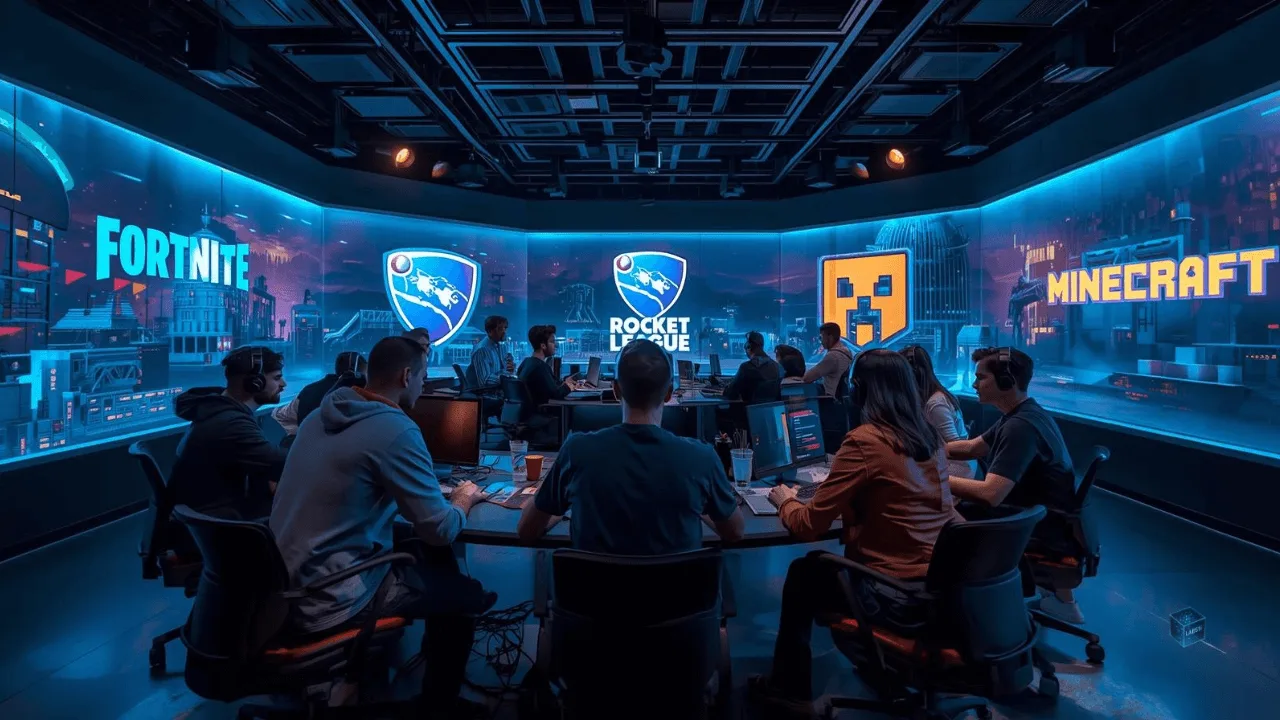
- Epic Games forced the conversation with Fortnite, even absorbing early backlash to prove that a universal network could work.
- Psyonix with Rocket League quietly led technical breakthroughs in unified matchmaking.
- Microsoft championed the idea publicly, opening Xbox Live APIs and pushing a “gamer-first” philosophy.
- Activision Blizzard normalized cross-play in blockbuster franchises like Call of Duty: Warzone and Overwatch 2.
Even Nintendo, once the most closed-off ecosystem, leaned in with Minecraft cross-play and Fortnite on Switch—an olive branch that symbolized gaming’s changing values.
In 2026, it’s now expected. Cross-play isn’t a “feature” to list on marketing slides—it’s table stakes.
4. The Cultural Shift: From Tribalism to Togetherness

Cross-platform play didn’t just change code—it changed culture.
For decades, gaming communities were split by hardware identity. You were a “PC master race” loyalist or a “PlayStation fanboy.” But once players started connecting freely, something fascinating happened: those identities blurred.
You began seeing PlayStation users teaming up with Xbox friends in Apex Legends, or mobile gamers holding their own in PUBG. Suddenly, skill mattered more than system.
It also made gaming more social. Discord servers, cross-platform friend codes, and shared cloud profiles turned gaming into a unified ecosystem. The industry had, for the first time, a truly global playground.
Cross-play became the great equalizer—reminding everyone that gaming was never about the device; it was about the connection.
5. The Business and Economic Ripple Effects

Where there’s a cultural shift, business follows.
Cross-platform play extended the life of multiplayer titles by years. Games no longer fractured their player base across systems, meaning matchmaking stayed faster, engagement stayed high, and revenue streams stayed open longer.
Free-to-play models thrived under this system. Whether you spent $10 on a battle pass from a PlayStation or a mobile phone, that money fed the same ecosystem.
It also democratized esports. Before cross-play, professional players had to choose platforms carefully—now, competitions can feature mixed-platform teams, with performance normalized by clever matchmaking and controller parity systems.
For publishers, the biggest win wasn’t just profit—it was data. Cross-platform play created unified analytics, allowing studios to understand player behavior across environments. In the data-driven age of gaming, that’s pure gold.
6. The Future: AI Matchmaking, Cloud Gaming, and the Metaverse

If cross-platform play was about uniting players, the next frontier is uniting realities.
By 2026, AI-driven matchmaking systems are personalizing lobbies in real time—analyzing skill, latency, and playstyle to ensure balance across devices.
Cloud gaming has also supercharged accessibility. Services like NVIDIA GeForce NOW, Xbox Cloud, and PlayStation Portal let you play console-quality titles on a tablet or smart TV—cross-platform by nature, not by design.
Then there’s the metaverse—a word that’s evolved past hype. With universal accounts and interoperable assets, your virtual identity can travel between worlds. Cross-platform gaming laid the foundation for this reality, where digital ownership transcends apps and consoles.
The next generation of gamers might not even understand what a “platform” is. They’ll just play—anywhere, with anyone.
7. The Hidden Challenges Still Ahead

Of course, unity doesn’t mean perfection. Cross-platform ecosystems still face hurdles.
Balancing controller vs. mouse-and-keyboard input remains tricky. Privacy and data sharing between corporations continues to spark debate. And developers face ongoing pressure to optimize updates across multiple ecosystems simultaneously.
Yet, compared to the fractured landscape of a decade ago, these are good problems to have—signs of growth pains in a maturing industry.
The key challenge moving forward will be maintaining player trust—ensuring that openness doesn’t compromise fairness, security, or creativity.
Conclusion: Play Without Borders
Cross-platform play isn’t just a technical achievement—it’s a cultural milestone. It represents gaming’s evolution from isolated pockets of fandom into a global, living ecosystem.
In a world where connection is everything, cross-play reminds us why gaming matters: not because of pixels or processors, but because of people.
So whether you’re fragging on a PC, grinding on a PS5, or chilling with friends on a mobile phone—you’re part of the same story now. The console wars are over.
And the new flag we all play under?
The flag of shared worlds.
FAQ
Frequently Asked Questions
Cross-platform play, or “cross-play,” means players using different devices—like PlayStation, Xbox, PC, or mobile—can play together in the same online match or server. It breaks down the traditional walls between platforms so your hardware no longer decides who you can game with.
By 2026, almost every major multiplayer title offers cross-play. This includes Call of Duty: Warzone, Fortnite, Apex Legends, Rocket League, Minecraft, Genshin Impact, Overwatch 2, and Valorant. Even newer releases like Destiny 3 and The Division: Nexus launched with cross-play enabled from day one.
Cross-progression lets your game data—like characters, skins, stats, and achievements—follow you wherever you log in. Thanks to cloud saves and universal accounts (Epic, Microsoft, Ubisoft Connect, etc.), you can start a match on your console, continue it on PC, and finish it on mobile without losing progress.
The biggest debate centers on input balance—controller players versus mouse-and-keyboard users. Developers now include optional filters or adaptive aim systems to keep competition fair. There are also minor latency and optimization differences, but overall, the benefits far outweigh the drawbacks.
Modern cross-play systems use secure APIs and shared authentication standards. Your account data typically stays with your main provider (like Xbox Live or PlayStation Network). Still, players should use strong passwords and two-factor authentication since cross-play connects multiple ecosystems.
Game studios rely on unified networking frameworks and cloud-based matchmaking. Engines like Unreal Engine 5, Unity, and custom systems like PlayFab and Epic Online Services handle the heavy lifting—translating player data and communication protocols between different platforms in real time.
Pressure from gamers and market data. Studies showed that cross-play increased engagement and revenue for everyone involved. Eventually, competition gave way to collaboration when companies realized the player base was the real battlefield—and cooperation benefited them all.
Definitely—in a good way. Esports organizers now host mixed-platform tournaments where players compete fairly regardless of device. Cloud-based input balancing and AI calibration systems ensure that cross-play doesn’t compromise skill-based competition.
The next step is cross-reality. Expect AI-driven matchmaking, cloud-native games with zero installs, and metaverse-style universes where your gamer ID, cosmetics, and achievements exist across multiple titles. The ultimate goal: seamless, borderless gaming.
Not completely. Exclusive titles still help define brand identity, but they’re shifting focus—from locking players out to inviting them in. Think more about shared universes and early access partnerships rather than full-blown exclusivity.
It’s ended the era of “console tribalism.” Today, gamers care less about what you play on and more about how you play. Cross-play has turned gaming into a universal language—one where connection trumps competition between hardware brands.