Table of Contents
What if you could feel your next headshot — not just see it?
Not in the “ouch” sense, but in that thrilling, electric way your body recognizes victory before your brain catches up.
Welcome to 2026 — where gaming isn’t something you play anymore. It’s something you inhabit.
From AR glasses that turn your living room into a cyberpunk arena to neural controllers that let you move with pure thought, this isn’t science fiction anymore. It’s the next level of immersion — and it’s changing how gamers, developers, and even non-gamers experience digital worlds.
Let’s dive into the gadgets that are redefining what “gaming gear” means — and what it tells us about the blurred future between reality and play.
AR Glasses: The Game Steps Into Your World
Remember when Pokémon GO made you chase imaginary creatures through parks in 2016?
That was the appetizer.
2026 is serving the main course — with next-gen AR glasses like Meta’s Orion, Apple’s VisionLight, and Sony’s Project Mirage turning any space into a game board.
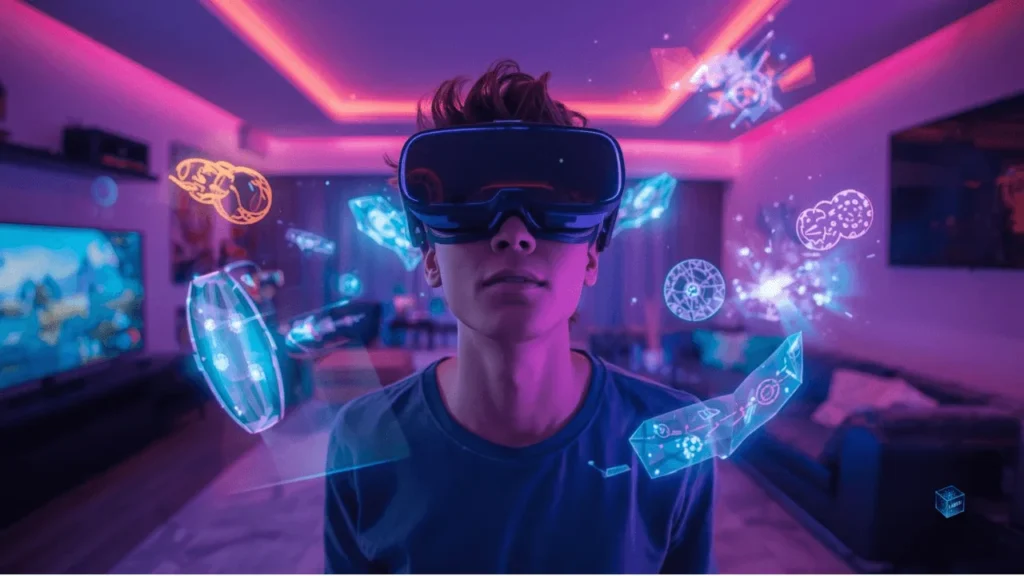
These aren’t bulky headsets anymore. They’re sleek, lightweight, and powered by retina-grade micro-OLED displays. Pop them on, and your apartment becomes an alien planet. Your cat? Suddenly a space companion. Your coffee table? A holographic command center.
AR gaming has evolved beyond novelty. Developers are building persistent worlds, meaning the game remembers your environment. If you fight off robots in your kitchen, the scorch marks will still be there when you return tomorrow.
That’s right — reality now has save files.
But the real revolution isn’t visual. It’s social.
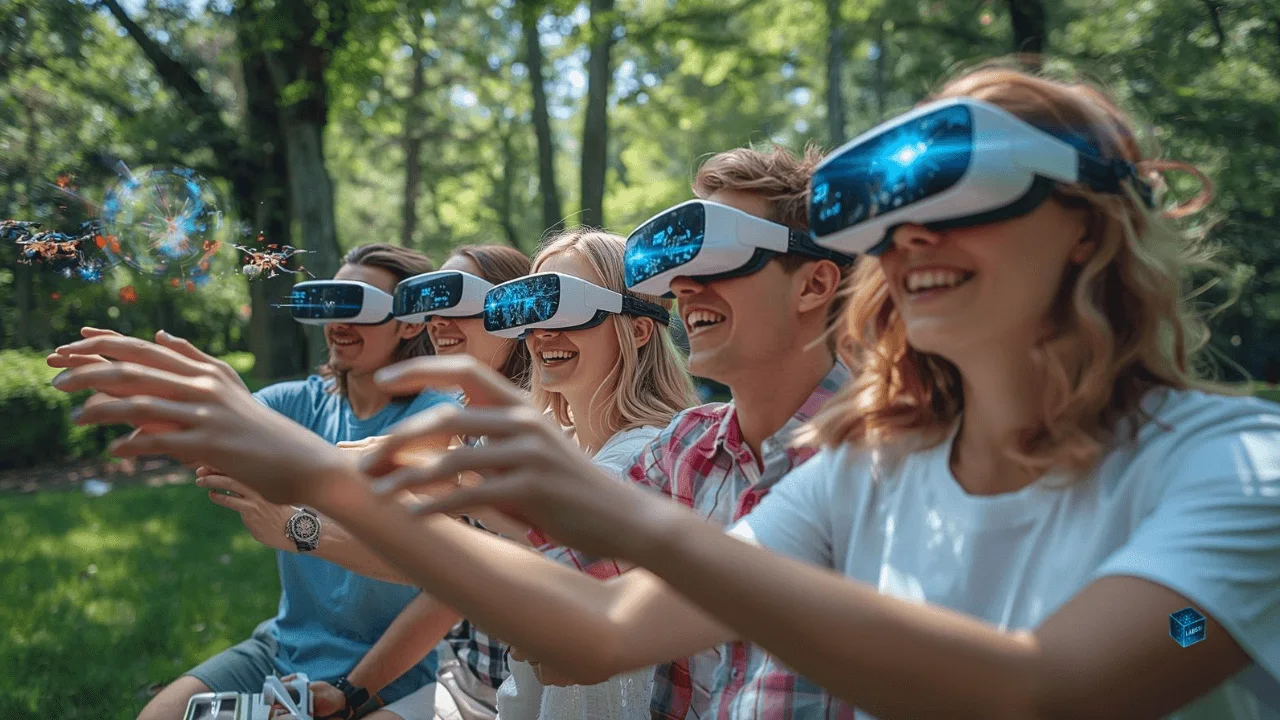
AR glasses make multiplayer gaming physically present again. Imagine teaming up with friends across the globe — their avatars standing right beside you in your living room. No headset hair. No isolation. Just shared reality, shared play.
It’s like LAN parties met the metaverse — and decided to move back into your neighborhood.
Neural Controllers: The End of the Button Era
There’s something sacred about the click of a controller button — a small act of control that’s defined gaming for decades.
But 2026 is quietly saying goodbye to that tactile era.

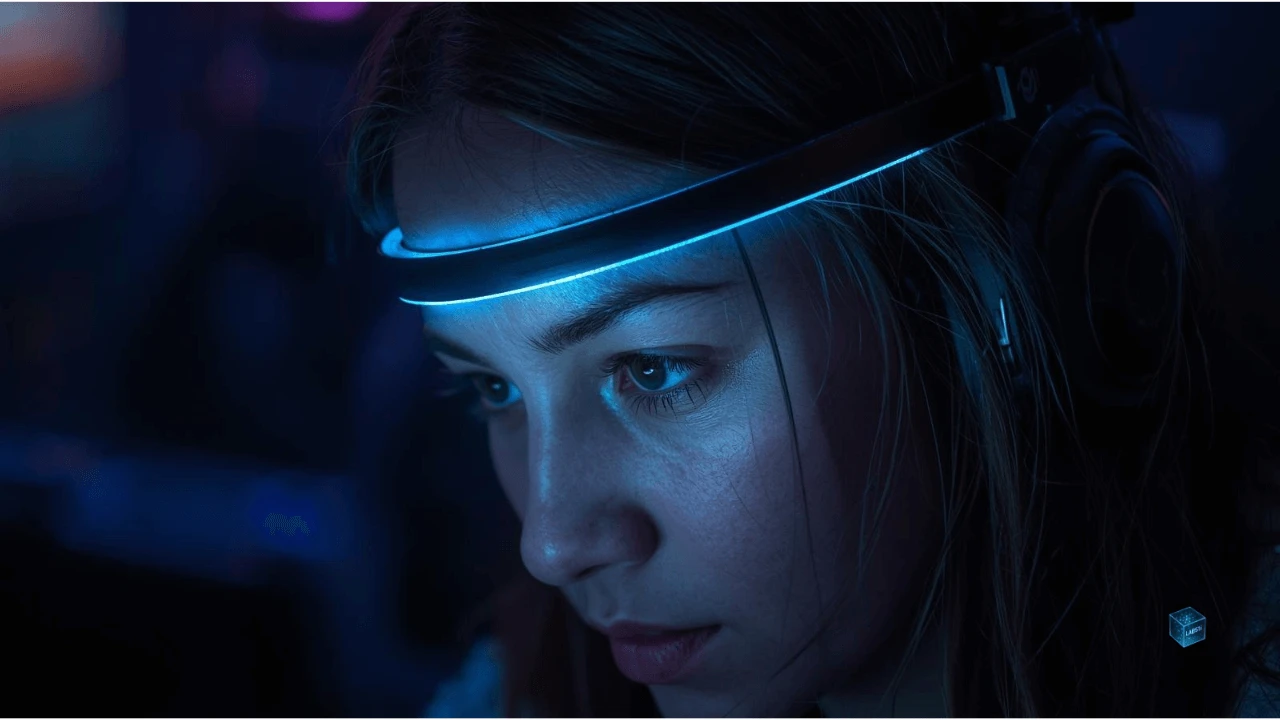
Enter neural input — gear like Valve’s “SynapseLink” and Neuralink’s “CortexBand,” which interpret electrical signals from your brain and translate them directly into in-game actions.
You think, you move.
You imagine, you aim.
You feel the rhythm of combat in your neurons — and the game responds.
This isn’t telepathy. It’s neuroscience-meets-gaming design. The sensors don’t read your thoughts (no, your embarrassing snack cravings are safe). They read intent signals — patterns in your motor cortex that fire milliseconds before your muscles move. The result?
Near-zero latency, infinite expression.
Competitive gamers are calling it the “mind meta.” Training now involves mental calibration, not just reflex drills. The best players are those who can think faster — literally.
But neural controllers aren’t just for esports. They’re quietly rewriting accessibility. Gamers with limited mobility can now play with the same speed and precision as anyone else. Gaming, once limited by hand-eye coordination, is finally becoming brain-first entertainment.
And that’s a revolution worth celebrating.
Haptic Suits: Feel the Game, Literally
When you get hit in a game, your character flinches — but you don’t.
At least, that used to be true.
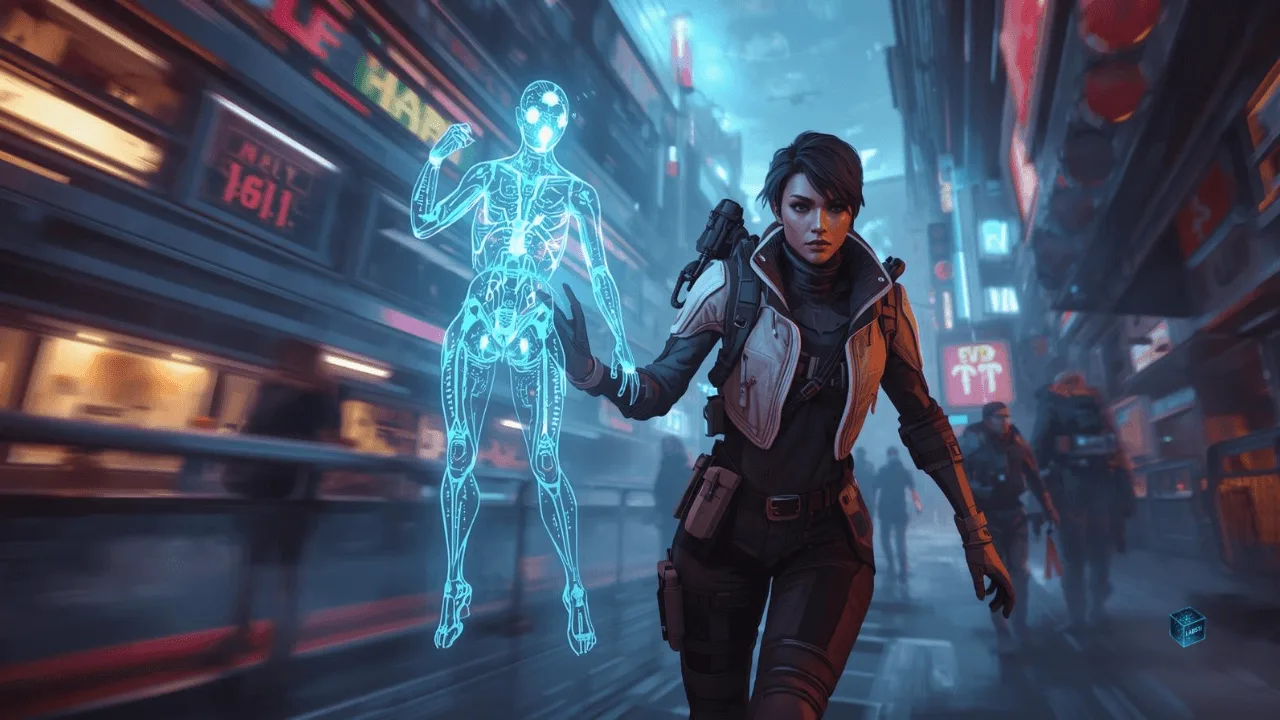
Now, with full-body haptic suits like Teslasuit 2.0 and bHaptics X360, your body becomes part of the experience. These suits use electrostimulation and pressure mapping to simulate texture, impact, and even temperature.
Walking through snow in an RPG? You’ll feel the chill.
Running through a desert battlefield? Your skin registers heat.
Getting hit by a blaster? A quick buzz across your torso.
It’s eerie, thrilling, and weirdly emotional — because your body is learning what your brain has only imagined.
For streamers and content creators, haptic suits are the new visual spectacle. Viewers don’t just watch reactions; they witness embodiment. It’s the difference between “Whoa, cool graphics!” and “Whoa, he just felt that explosion!”
The Rise of Sensory Integration: When Games Engage Every Sense
Sight, sound, touch — what’s next?
Smell. Taste. Balance.
In 2026, companies like FeelReal and OVR Technology are adding smell modules to gaming rigs. A gentle whiff of pine when you enter a forest. The metallic tang of space stations. Even the ozone scent after a digital lightning storm.
Is it gimmicky? Maybe.
Is it immersive? Absolutely.
VR cafés in Seoul and Tokyo already offer 5D gaming booths, where scent diffusers, air gusts, and rumble floors create cinematic realism. Players describe it as “dreaming while awake.” The line between sensory reality and simulation grows thinner by the update.
It’s not about more realism — it’s about more emotion.
When all your senses collaborate, your memory encodes the experience as something real.
You don’t just remember playing the game — you remember being there.
AI Companions and Emotion-Adaptive Gear
While hardware evolves, AI isn’t staying idle.
In 2026, your gear doesn’t just respond to inputs — it understands your mood.
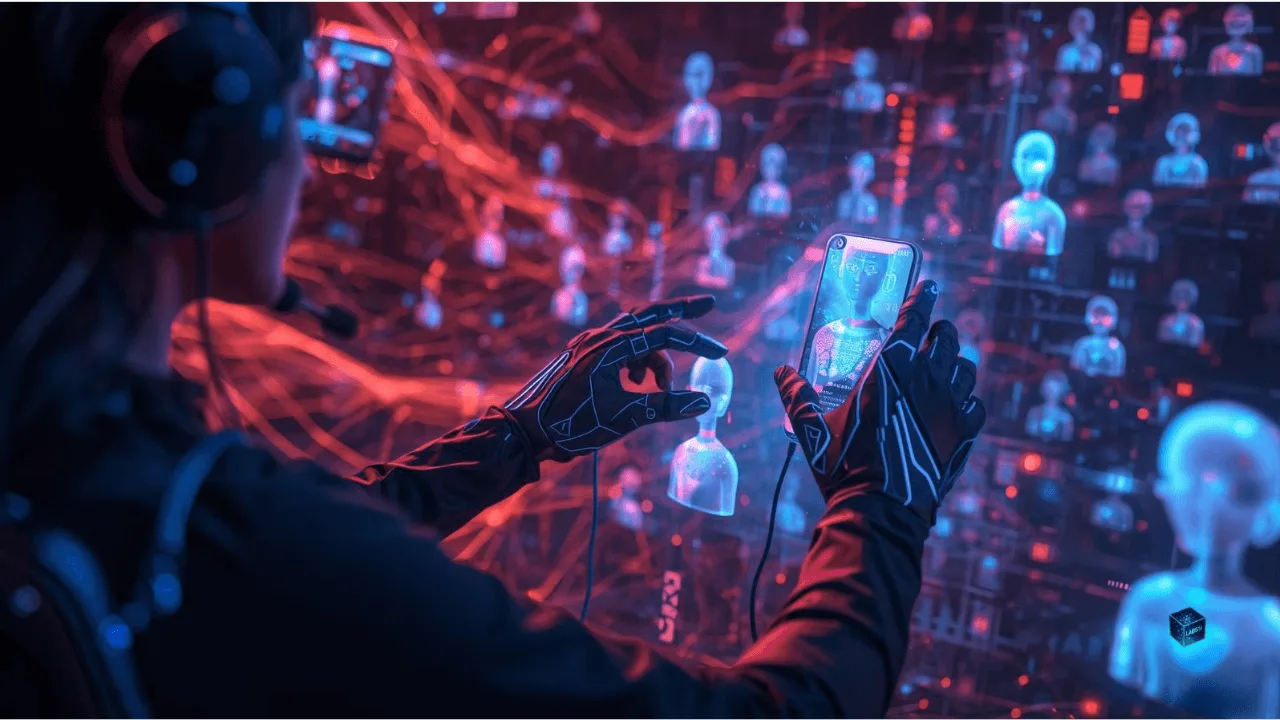
Gaming headsets now come with biometric sensors that read heart rate, pupil dilation, and voice tone to infer emotion. When your adrenaline spikes, your AI companion might calm the music or adjust the difficulty on the fly.
When you’re tired, your gear nudges you toward exploration instead of combat.
AI companions like “Nova” or “Echo” in modern games have become more than sidekicks — they’re emotional mirrors. Imagine an NPC that notices when you’re frustrated and cracks a joke to lighten the mood. That’s no longer design; it’s empathy rendered in code.
In other words: your gaming gear is becoming a friend who knows when to pass you the controller.
The Streaming Evolution: From Spectator to Participant
Streaming in 2026 isn’t just about watching someone play — it’s about joining them mid-stream.
Platforms like Twitch 3.0 and YouTube LiveSync now allow interactive participation. Viewers wearing AR glasses can drop power-ups, summon NPCs, or even project themselves as holograms beside their favorite creators.
It’s gaming turned into shared theater.
The audience isn’t in the stands anymore — they’re on the field.
With new sensory gear, streamers are turning performance into art. They choreograph gameplay with movement, body feedback, and emotional synchronization. Watching a live VR combat session now feels like watching a concert — part game, part dance, all adrenaline.
What It All Means: Gaming as a New Reality Layer
So, where does all this tech lead us?
The answer isn’t about hardware specs or teraflops. It’s about connection.
Every major leap — AR, neural input, haptics — pulls gaming closer to one thing: presence.
The sense that what’s happening in there is also happening out here.
In the past, gaming was a screen-based escape. In 2026, it’s a mirror — reflecting our creativity, emotions, and even consciousness.
We’re not playing characters anymore; we’re coexisting with them.
But with great immersion comes great responsibility. Privacy concerns around neural data are already heating up. Ethical questions about “digital pain” in haptic environments loom large. The next frontier isn’t just technical — it’s philosophical.
What happens when the line between “virtual” and “real” finally disappears?
Maybe that’s the ultimate boss fight.
Conclusion: The Game Has Only Just Begun
Back in 1989, the Game Boy fit the future of gaming into your pocket.
In 2026, the future fits inside your mind.
Gaming gear has evolved from tools of play into extensions of self — merging flesh and circuitry, imagination and sensation. AR glasses show us worlds layered over our own. Neural controllers let us move without movement. Haptic suits make digital stories physically unforgettable.
But beneath all the futuristic flair, the core of gaming remains beautifully human: curiosity, connection, creativity.
Whether through buttons or brainwaves, we’re still chasing that same spark — the thrill of stepping into a new world and saying, “Let’s see what happens.”
The difference now?
The world looks back.
FAQ
Frequently Asked Questions
Not anytime soon. While neural tech offers unmatched immersion, many players still love the tactile joy of a controller. Expect both to coexist — like vinyl records and Spotify.
Early models were bulky, but 2026 versions use ultra-light materials and adaptive lenses. Most gamers say they feel like wearing normal glasses after a few minutes.
Heat management and affordability. Top-tier models can still cost as much as a gaming PC, but prices are dropping as materials evolve.
Surprisingly, yes — especially in VR arcades. It’s less about realism and more about atmosphere. Think of it as the “soundtrack” for your nose.
Non-invasive headbands and electrodes are FDA-cleared for consumer use. They don’t read thoughts, only electrical intent — think of it as “brain Wi-Fi,” not mind control.
They’re getting better. Through biosignal analysis and behavioral algorithms, they can adapt tone and gameplay dynamically — though they’re not conscious (yet).
Expect biotech fusion — gear that blends with your body at a cellular level, enabling constant immersion. Or in plain English: the game never pauses.