Table of Contents
The Moment Search Stopped Feeling Like Search
Just Think,
It’s 2026, and you’re planning a trip to Kyoto. Instead of typing “best things to do in Kyoto” into Google, you ask your AI search assistant, “Plan me a 5-day trip to Kyoto with a mix of culture, hidden food spots, and chill evenings.”
In seconds, it returns a full itinerary — train routes, local izakayas, weather-based outfit advice, and even a polite note you can copy to message your Airbnb host in Japanese.
You didn’t “search.” You collaborated.
That subtle shift — from looking for links to having a conversation — is the fault line reshaping the world of information. And standing on either side of that line are two very different giants: Google, the old gatekeeper of the web, and AI search, the emerging mind that doesn’t just find answers — it creates them.
In the present, you’re pondering a philosophical question: “What is the relationship between memory and identity?” You type it into Google. The results are a scattered mess—a Wikipedia entry on neuropsychology, a pop-science article, a dense Stanford Encyclopedia of Philosophy page that makes your head spin. You’re left to connect the dots yourself.
This is the old way. The keyword way. And by 2026, it will feel as archaic as a card catalog.
The race is on to redefine how we find information. On one side, you have the familiar giant, Google, evolving its classic model. On the other, a new breed of AI-native search engines like Perplexity, and integrated AI like ChatGPT and Copilot, that don’t just find links—they synthesize understanding. For the creative and the curious, this isn’t just a tech upgrade; it’s a revolution in how we think, create, and explore ideas.
From Librarian to Thought Partner: The Fundamental Shift
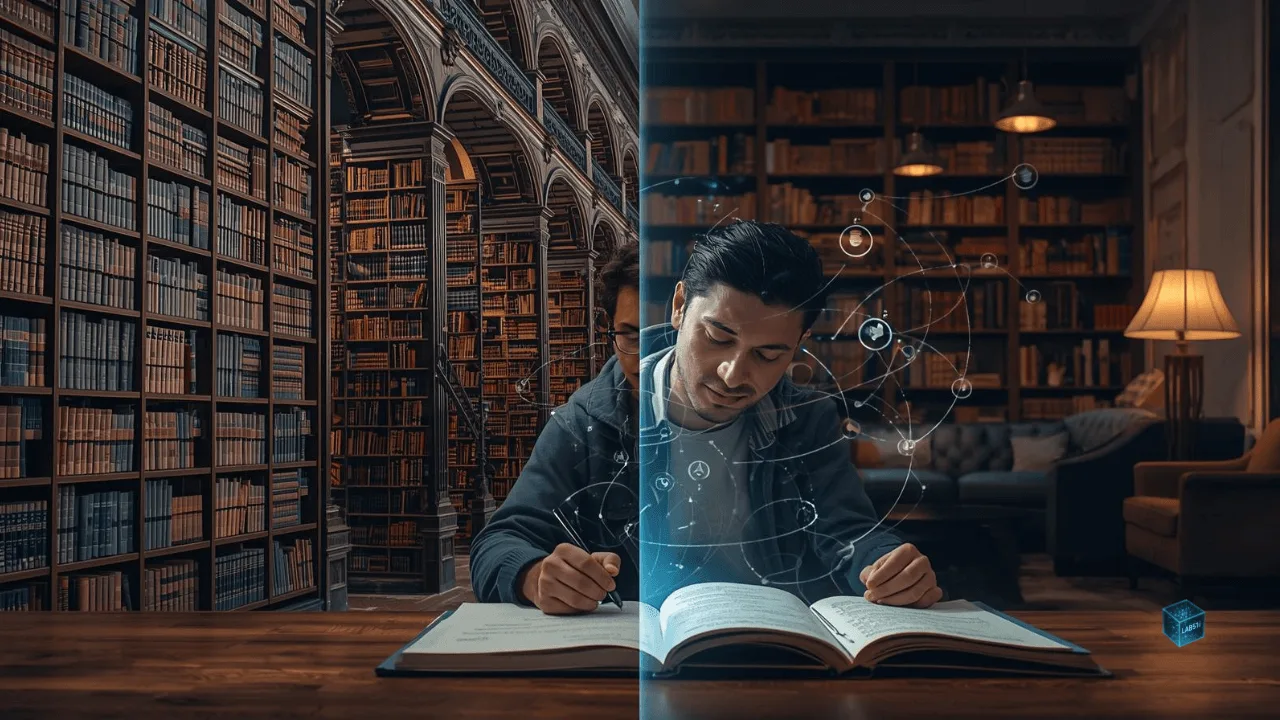
Think of Google as the world’s most efficient librarian. You bring it a set of keywords—your query—and it scours the infinite library of the internet to bring you back a stack of books (webpages) that might contain your answer. The work of reading, synthesizing, and forming a coherent answer? That’s still your job.
Now, imagine a new kind of partner. This one sits down with you, listens to your messy, half-formed question, and says, “Ah, I see what you’re getting at. Let me pull from my deep knowledge of history, science, and literature, and explain it to you in a clear, conversational way. I’ll even show you my sources.”
That’s the leap from search engine to answer engine.
This new partner doesn’t just respond to keywords; it understands intent and context. It’s the difference between searching for “Sartre nausea themes” and asking an AI, “Can you explain the theme of existential freedom in Sartre’s Nausea as if I’m a beginner who’s never read philosophy?” The first gives you links to analyze. The second gives you a curated, contextual understanding.
The End of the Blank Page: AI as a Creative Co-Pilot

For the aspiring novelist staring at a blinking cursor, this is a godsend. AI search is less about finding a fact and more about breaking creative blocks.
Let’s return to our stormy sea scene. Instead of that fragmented keyword hunt, you could prompt your AI search partner:
*”I’m writing a scene where a 17th-century merchant ship is caught in a gale. Describe the sensory details—the sound of the rigging, the feel of the cold sea spray, the specific commands the captain might be shouting. Weave in a detail about the crew’s superstitions during a storm.”*
What you get back isn’t a list of links. It’s a rich, multi-paragraph description you can use for inspiration. It’s a first draft of your atmosphere. The AI has done the heavy lifting of historical research and sensory brainstorming, freeing you to focus on character and plot.
It can help you build consistent worlds (“What would a city built inside a giant, dormant volcano look like?”), develop character motivations (“Give me three psychological reasons a wealthy person would become a vigilante”), or even troubleshoot dialogue (“Is this conversation sounding too modern for my medieval setting?”).
The AI doesn’t write the novel for you. It acts as an infinitely knowledgeable research assistant and brainstorming partner, ensuring the blank page is never truly blank again.
Connecting the Dots: The Philosopher’s New Toolkit
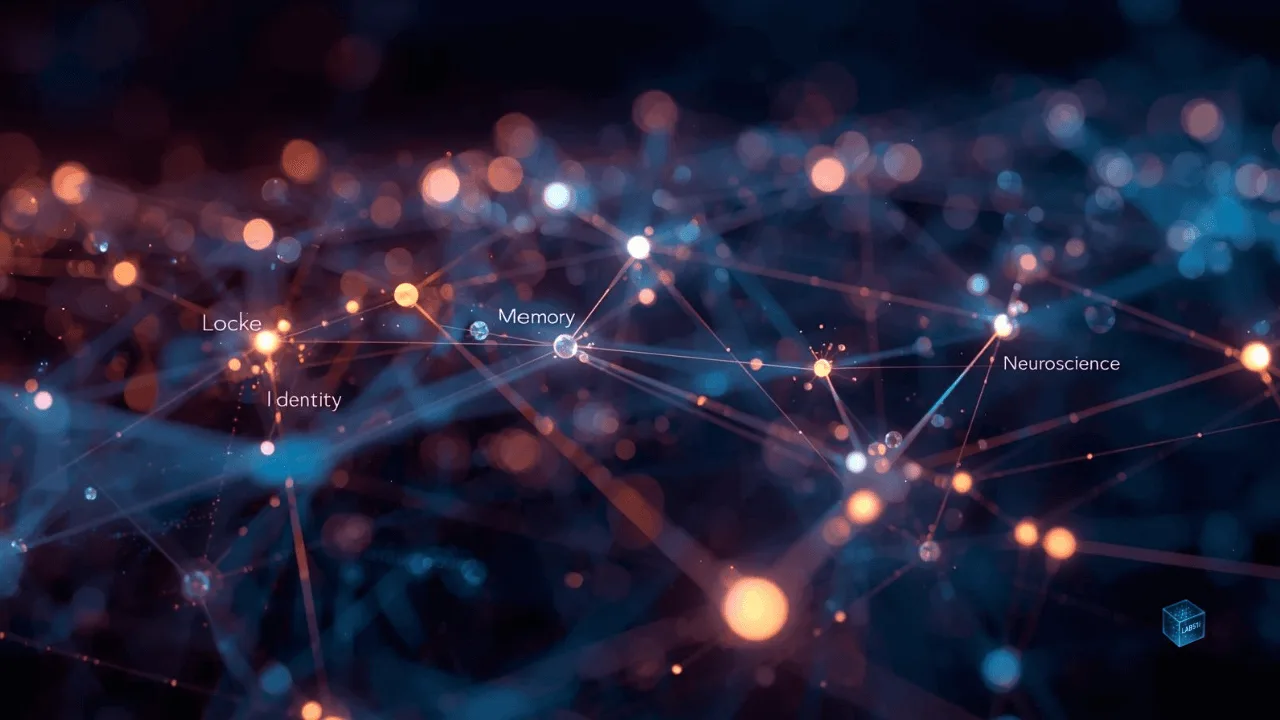
For the curious mind wrestling with abstract concepts, the shift is even more profound. Philosophy isn’t about isolated facts; it’s about the connections between ideas. Traditional search engines fracture these connections. AI search is built to weave them together.
Your question, “What is the relationship between memory and identity?” can be the start of a dialogue.
- You: “Explain the relationship between memory and identity from a philosophical standpoint.”
- AI: “Certainly. The link is a central debate. John Locke, for instance, proposed that personal identity is tied to psychological continuity, particularly memory. If you don’t remember an action, can it be said ‘you’ did it? However, this has problems. What about forgotten memories? Let me outline Locke’s ‘memory theory’ and its key criticisms…”
- You: “That’s great. Now, how does this contrast with a modern neuroscientific view?”
- AI: “An excellent question. Neuroscience often views memory not as a perfect recording but a reconstructive process. This challenges Locke’s idea… Some philosophers like Daniel Dennett argue that the self is a ‘center of narrative gravity,’ a story we tell using memories, which aligns with this reconstructive model…”
Suddenly, you’re not just reading static pages. You’re engaging in a Socratic dialogue, building a scaffold of understanding. The AI helps you traverse disciplines, connecting philosophy to neuroscience to cognitive psychology in a single, fluid conversation. It’s the difference between being given a pile of puzzle pieces and having a guide help you see how they fit together.
The Trust Paradox: The New Burden of the Curious
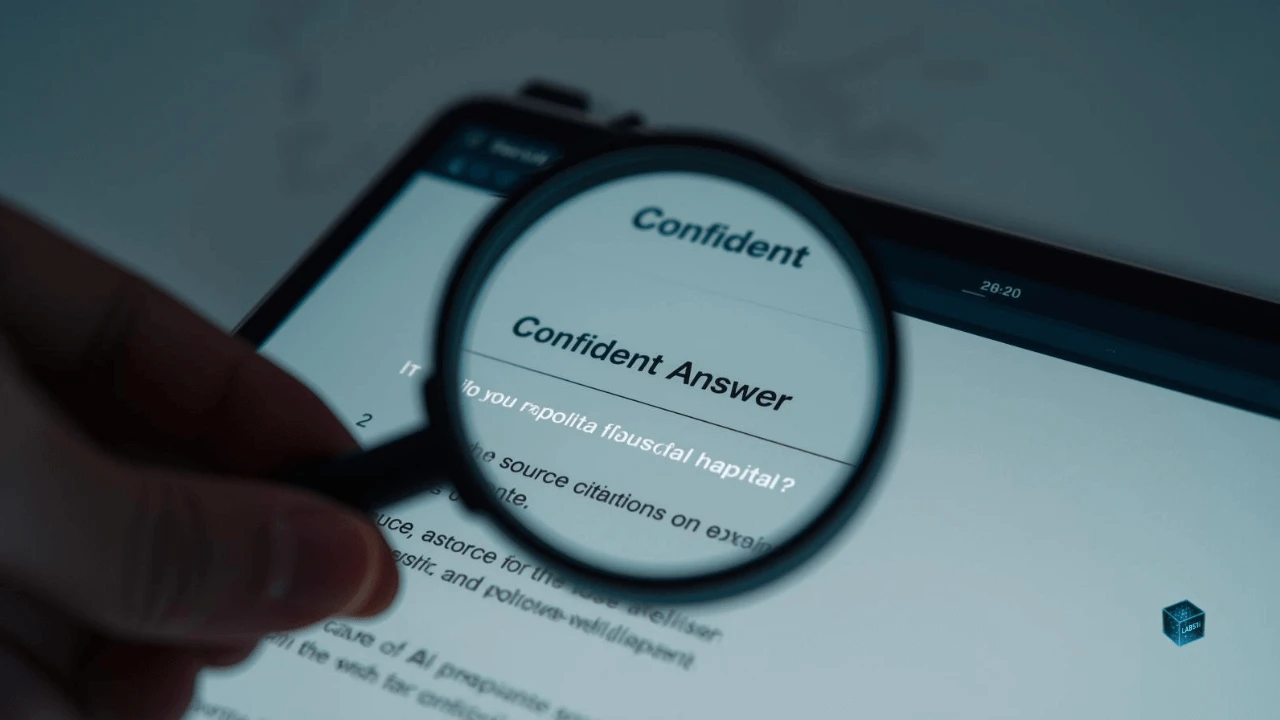
This new power comes with a new responsibility. When Google gives you ten blue links, you can cross-reference, check the source’s credibility, and decide what to trust. It’s work, but the raw material is transparent.
With an AI that provides a single, sleek answer, the source of that information becomes opaque. Is it synthesizing reputable academic journals or a random, unvetted blog post? This is the “trust paradox.” The easier it is to get an answer, the more vigilant we must be about its provenance.
The next generation of AI tools is already tackling this with features like inline citations and source highlighting. The skill for 2026 won’t just be asking the right question; it will be developing a critical eye for the AI’s answer. We must become editors, not just consumers. We will learn to probe: “What are your sources?” “Are there opposing viewpoints?” “How confident are you in this synthesis?”
2026: The Year Your Curiosity Got an Upgrade
By 2026, the way we “search” will be as different from today as Google was from the Yellow Pages. The transition will be messy, with questions about accuracy and intellectual property still raging. But the trajectory is clear.
We are moving away from a world of query-and-retrieve and into a world of conversation-and-creation. For the novelist, the philosopher, the artist, and the lifelong learner, this is an emancipation. It frees us from the drudgery of information-gathering and allows us to focus on what makes us uniquely human: our creativity, our critical thinking, and our insatiable desire to weave information into wisdom.
So the next time you face a creative block or a philosophical quandary, don’t just type. Ask. Converse. Collaborate. The blank page and the unanswerable question are about to get a lot less intimidating. Your new partner is waiting.
FAQ
Frequently Asked Questions
No. It’s a creative partner, not a ghostwriter. It handles research and brainstorming to free you up for the actual writing only you can do.
Yes. It can generate sensory details, plot ideas, and character motivations to help you overcome a blank page.
Not if used as a tutor. It can explain dense concepts in simpler terms, helping you better understand the original text, not avoid it.
You must verify. Always check its sources, ask for counter-arguments, and use your own critical thinking. Don’t trust it blindly.
No. You’ll likely use both: AI for deep research and complex questions, Google for quick facts and a broad view of current topics.
It synthesizes existing information, but you direct it. Ask it to combine weird concepts (e.g., “a samurai in Victorian London”) to spark truly unique ideas.